
Effect Pigment Solutions
——R&D, Production, Sales

|
Shen Zhen Esong Technology Co., Ltd. Contact: Miss Cui mobiles: 18926475200 E-mail: 1204047160@qq.com Address: Building B, Kaixin Industrial Park, No. 52, Langyue Road, Tangxiayong Community, Yanluo Street, Baoan District, Shenzhen |
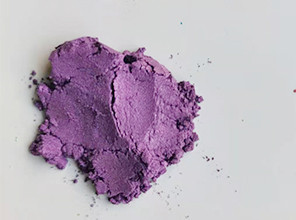
Selection of pearlescent pigment materialsIssuing time:2025-01-15 10:34 Material selection 1 BecausePearlescent pigmentItself is semi-transparent and needs to rely on external light reflection to achieve a good pearlescent effect. Therefore, when choosing plastic, materials with better transparency should be used as much as possible. The following plastics are commonly used, and their common point is that they are more transparent. After adding pearlescent pigment, light can reach the surface of the pearlescent pigment晶片 through the surface plastic to cause reflection and refraction. Polyethylene-based HDPE, LDPE (film), polypropylene-based PP, modified polyethylene-based EVA, acrylate-based PMMA, saturated polyester-based PET, polycarbonate-based PC, polyvinyl chloride-based PVC, unsaturated polyester-based AK, epoxy resin-based EPT, polyurethane-based PU. Plastics with low transparency or opacity, such as GPPS, HIPS, ABS, etc., have an unobvious pearlescent effect, but this does not mean that these plastics cannot use pearlescent pigments, only that the dosage of pearlescent pigments is relatively large. Pearlescent pigment
2 From the aspect of the selection of mixed pigments, pearlescent pigments cannot be mixed with conventional opaque pigments (such as chromium, cadmium pigments, titanium dioxide). Pu Pearlescent pigments can be used in transparent and semi-transparent plastic resins. Using pearlescent pigments will bring a charming color visual effect. Pearlescent pigments are widely used in cosmetic containers, various packaging, toys, decorative materials, various films and other plastic products. |


mobiles station Wechat QR code
Shenzhen Esong Technology Co., Ltd.
Contact: Miss Cui
mobiles: 18926475200
E-mail: 1204047160@qq.com
Address: Building B, Kaixin Industrial Park, No. 52, Langyue Road, Tangxiayong Community, Yanluo Street, Baoan District, Shenzhen
Pearlescent pigments, color-changing pigments, fluorescent pigments
Main area: Jiangsu, Shandong, Shanghai, Guangdong, Zhejiang, Hebei, Henan, Fujian, Sichuan, Sichuan, Anhui
Record number: Guangdong ICP No. 54622712
©2025 Shenzhen Yisong Technology Co., Ltd. All rights reserved
All articles, contents, pictures and texts on this website are from the